My Father Bought NAC for His Fatty Liver. Here's Exactly What It Does, and What It Doesn't
He's 71, takes five pills every morning, and was told to "keep an eye on it." If that sounds like someone in your house, this is what I told him at his kitchen table.

By Dr. Elise Marlow, MD
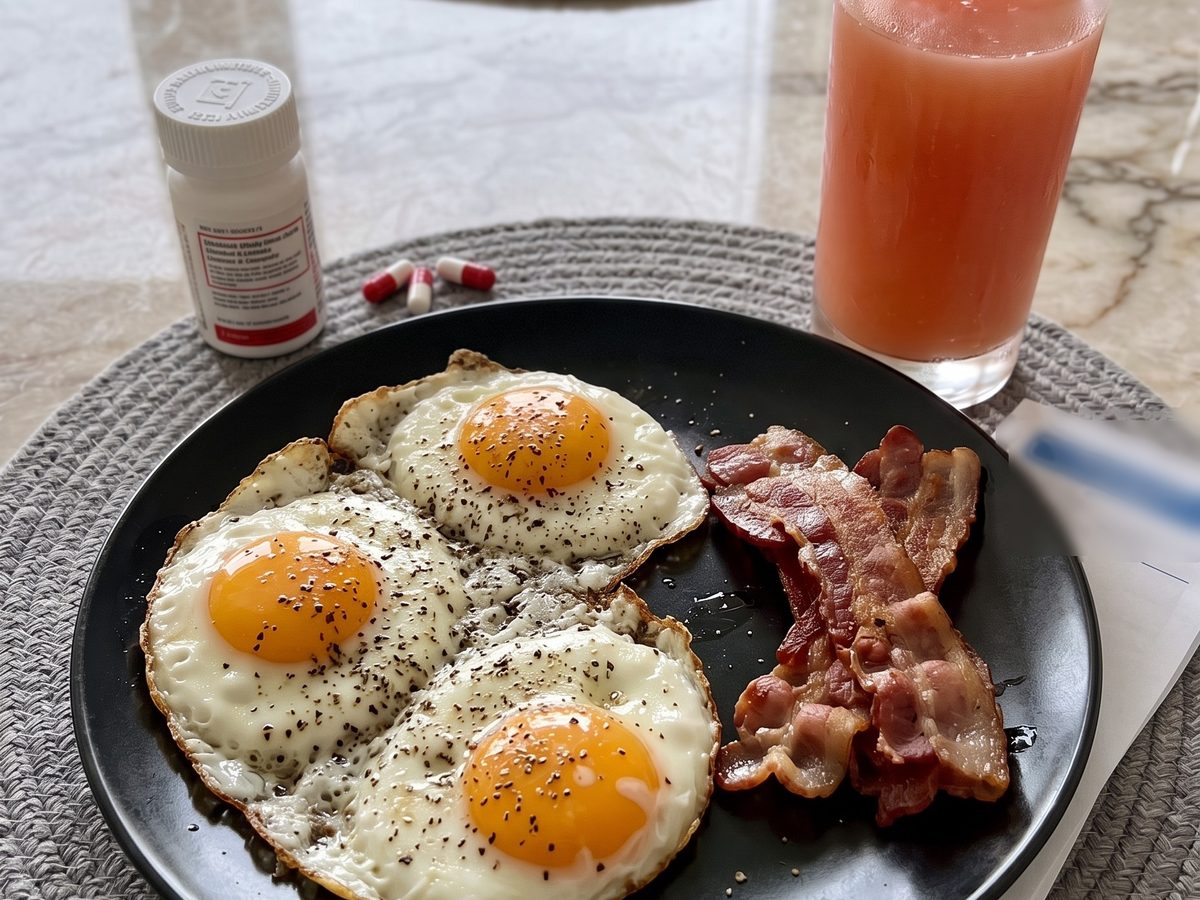
The bottle was sitting next to my plate when I sat down to Sunday dinner.
White cap. Plain label. Three letters big enough to read across the table: NAC.
My father had put it there on purpose. He's 71. He ran the second-shift crew at a parts plant for 31 years, and he still lines things up when he wants an answer.
"Your turn, Doc," he said. "Does this stuff take care of the fat?"
Then, before I could answer: "And can I take it with my metformin?"
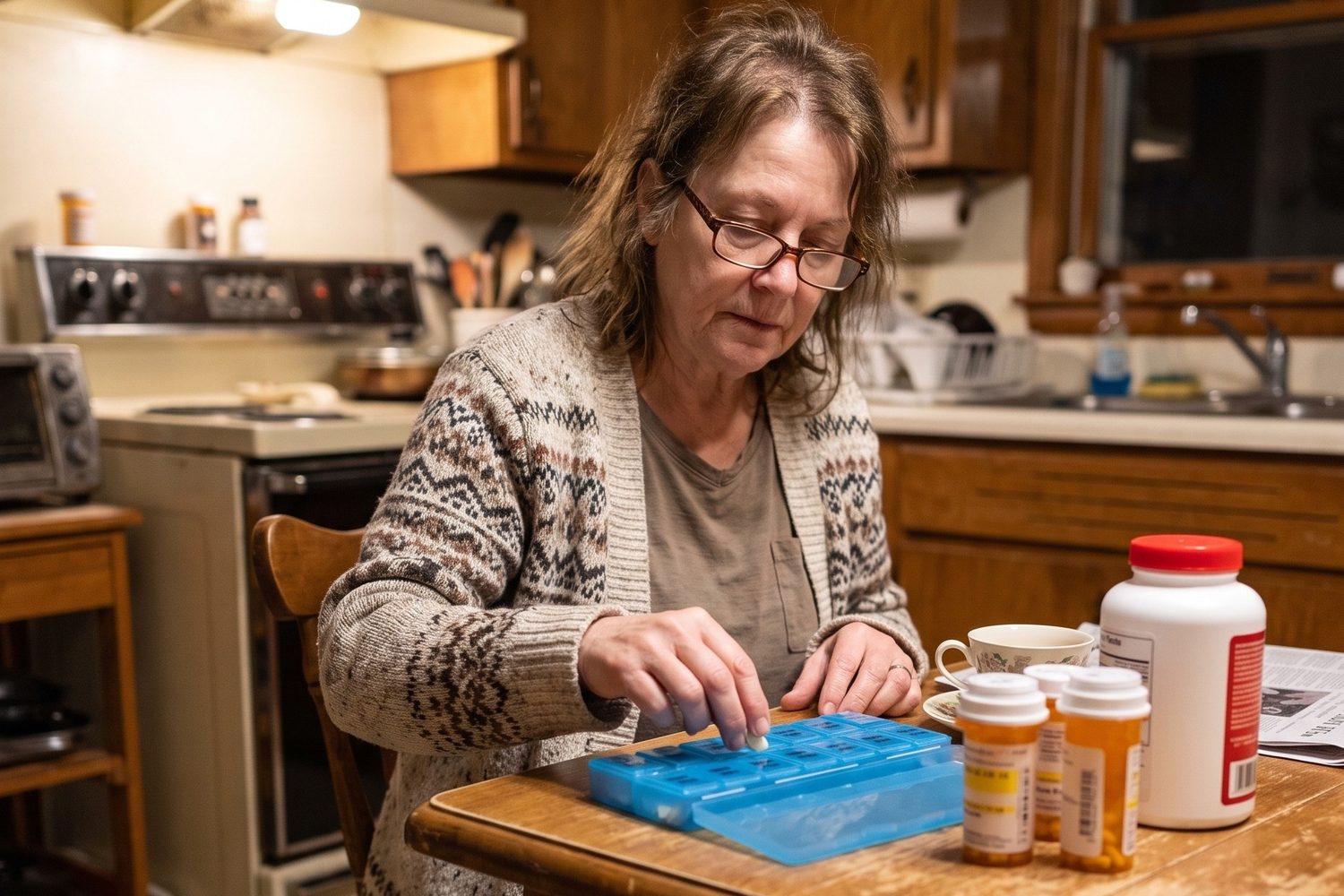
My mother didn't look up. She was at the end of the table with the pill organizer open, filling next week. Seven little lids. Five things in every morning box, one more at night.
I'm a doctor. I'm not his doctor, and I wasn't going to become one over pot roast.
But those were two fair questions. I hear them every week from people standing in the vitamin aisle with nobody to ask.
So here's what I told him. What NAC actually does to a fatty liver. The one job it doesn't do. And the 30-second check we ran on every bottle in his cabinet.
It took the back of his lab printout and a pen.
How he found out. Maybe how you did, too.
It didn't start with a pain. It started with a printout.
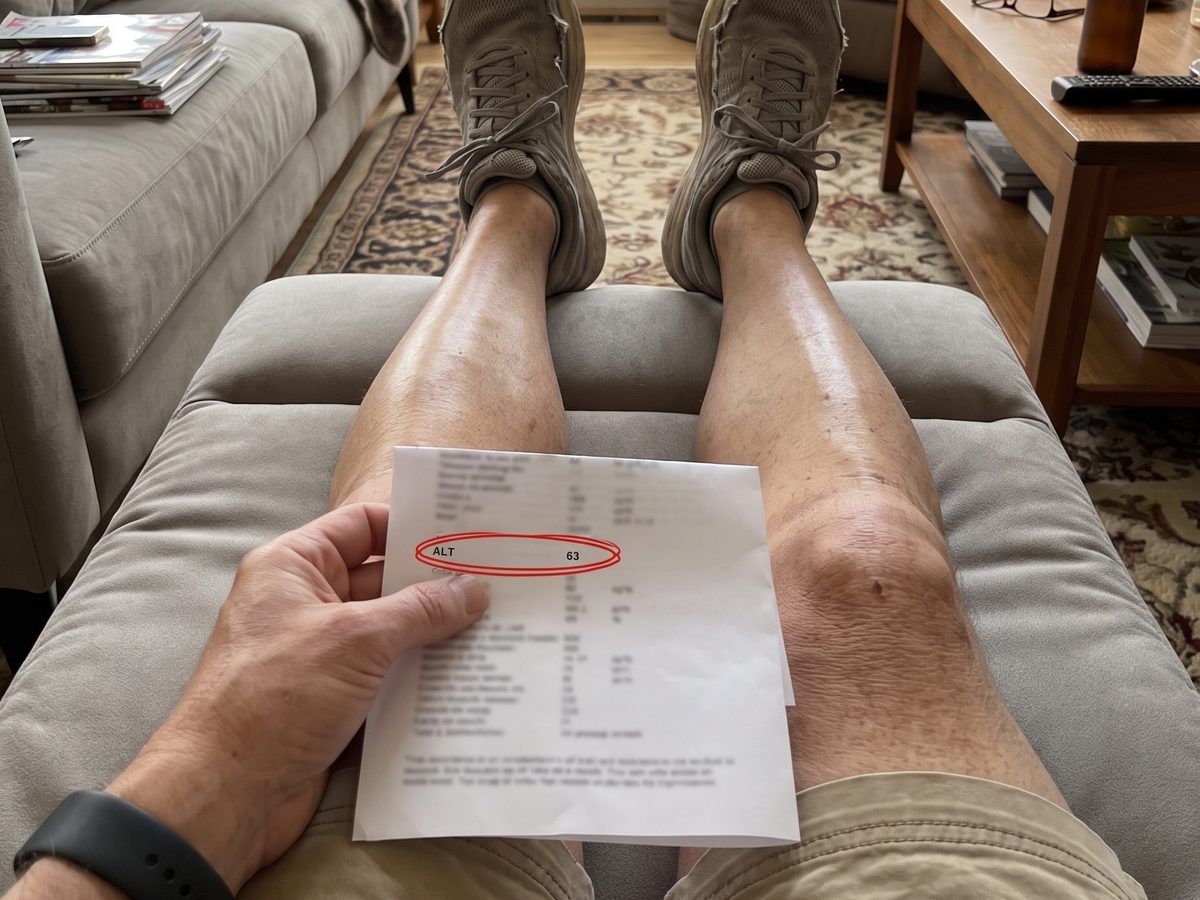
His yearly bloodwork landed in the patient portal on a Thursday, two days before anyone called. Most of the page was black. One line was red: ALT, a liver enzyme, a little over the line.
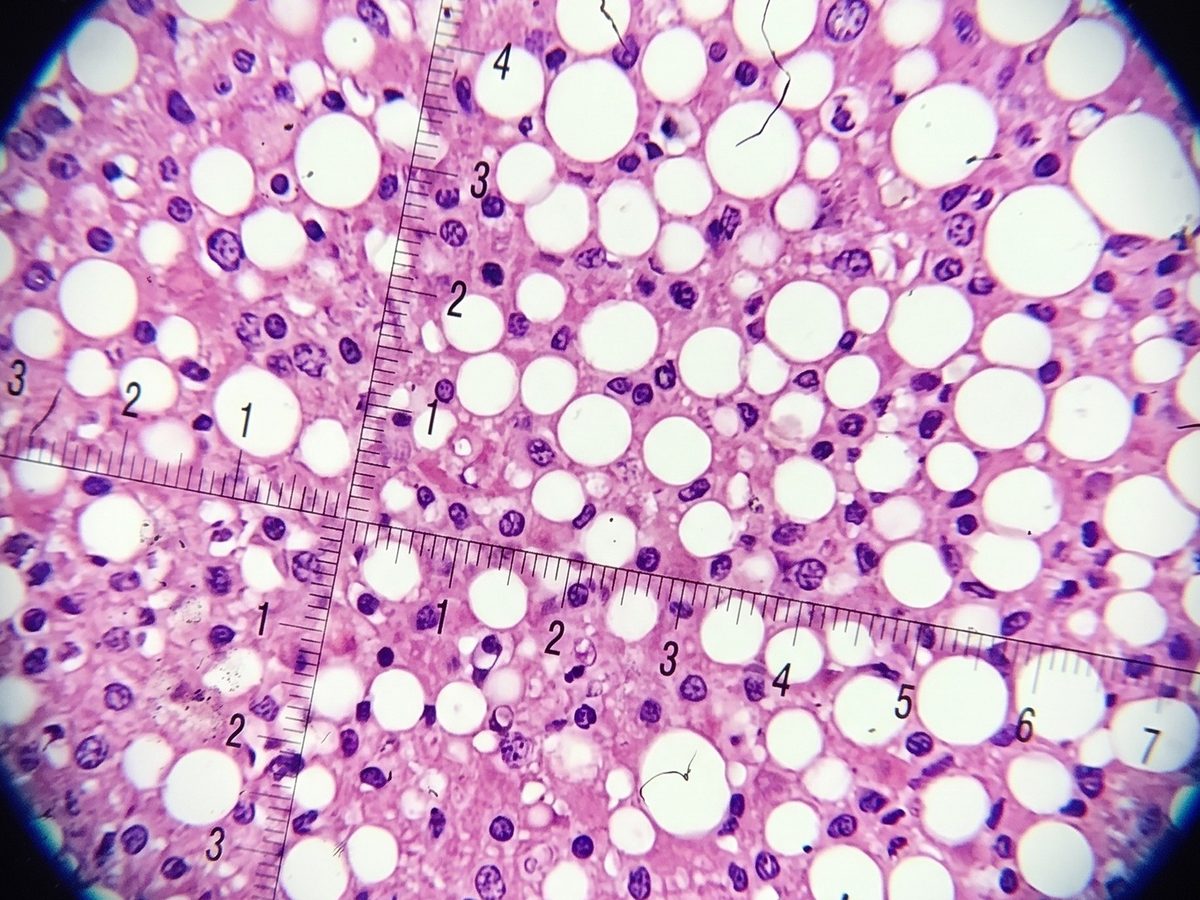
An ultrasound followed. The report used two words my father had never once worried about: fatty liver.
His doctor was kind and quick. "It's common. Keep an eye on it. Lose a few pounds. We'll recheck in six months."

I want to be fair to that doctor. Fatty liver is common, and a six-month recheck is a reasonable plan. In a fifteen-minute visit, I might have said the same words.
But my father didn't hear a plan. He heard "wait."
And my mother spent two nights reading things on the internet she wished she hadn't.
So the next morning he drove to the vitamin store. A young man in a store vest walked him to the liver shelf and tapped a bottle.
"NAC. It's what the hospital gives you for a Tylenol overdose. Great for the liver."
That was enough. My father bought two.
Does this sound like your house?
In fifteen years of practice, I've learned his story isn't rare. If you're past 60, see how many of these fit:
- You take your morning pills with coffee: blood pressure, cholesterol, maybe something for sugar.
- Someone in your house fills the organizer on Sunday. Maybe it's you.
- A line on your last bloodwork came back flagged, and the plan was "keep an eye on it."
- You've picked up a bottle that said LIVER and wondered if it does anything at all.
If two of those sound like your house, his answers are yours too.
"It's the statin, isn't it?"
That was his first guess. It's almost everyone's.
"It isn't," I told him. Yes, the statin label asks for a liver test before the first dose. But the FDA looked hard at statins and the liver back in 2012. It called serious liver injury from them rare.
"Then it's my fault."
Not that either. Fatty liver is common, and more so with type 2 diabetes. According to the NIH, studies suggest that a third to two-thirds of people with type 2 diabetes have it. My father has been on metformin for nine years.
But there was something nobody had mentioned to him. His liver doesn't only hold fat. It also handles most of his pills.
Not every pill goes through the liver, but most do, says the Merck Manual. It's the body's main place for breaking drugs down. And the enzymes doing that work slow down with age.
One of the tools the liver uses for that kind of work is something it makes for itself: glutathione, its own antioxidant.
Think of it as a supply the liver keeps on the shelf. The liver keeps making more, quietly, and most days you never notice.
Acetaminophen is the famous example. Taken in large amounts, breaking it down can use up that supply. That's the whole hospital story. Alcohol can draw it down too.
And every over-the-counter acetaminophen box sold in the U.S. has to print a "Liver warning." Go look at the one on your nightstand.
Which brings us back to the bottle next to my plate.
So what does NAC actually do to a fatty liver?
NAC is short for N-acetyl-L-cysteine. In the liver, its main job is simple. It's the raw material the liver uses to make new glutathione.
That's why the young man in the vest wasn't wrong about the hospital. For an acetaminophen overdose, hospitals give acetylcysteine. The FDA label for that hospital version says it probably works by keeping up the liver's glutathione.
So NAC restocks the shelf. That part is real.
Here's the part I didn't want my father to learn the hard way.
A careful trial published in 2025 put NAC to the test. Adults with fatty liver took either NAC or a look-alike dummy pill for eight weeks. Neither they nor the researchers knew who got which.
At the end, the NAC group's glutathione had gone up, just as you'd expect.
Their liver fat had not changed any more than the dummy group's. Neither had their liver enzymes.
That is exactly what NAC does to a fatty liver. It keeps the glutathione shelf stocked. In that trial, it didn't move the fat.
My father put his fork down. "Then what does?"
Four circles on the back of a lab printout
I turned his printout over and drew four circles.
Dad ran crews for 31 years, so I put it in his language. Your liver is a plant running four crews at once.
Crew one guards the walls. It protects the liver's own cells. Milk thistle and dandelion are tied to this crew.
Crew two keeps the shelf stocked. That's glutathione, the hospital story. NAC works here, along with glutathione itself.
Crew three keeps bile moving. Artichoke is tied to this one.
Crew four drives the trucks. It packs up fat and hauls it out of the liver. That job runs on choline.
The National Institutes of Health is blunt about it. Choline is essential for moving fat out of the liver, and when the body runs short, fat builds up there.
Your liver = 4 crews
dandelion
glutathione← your NAC
cholinethe fat is here
One bottle, one crew. Count them.
I tapped circle four. "This is the one the fat is about. NAC doesn't drive these trucks. It was never supposed to."
He looked at it for a long time. "So I bought crew two."
"You bought a good crew two. It's just one crew."
"Fine. I'll go buy a choline pill."
"Then you'll have two bottles for two circles," I said, "and a sixth pill in the morning box."
He laughed. "I rattle when I walk as it is."
"If the next one comes back fine, is it gone?"
My mother asked me that after he went to watch the game. Quietly, so he wouldn't hear.
Not necessarily. A normal printout doesn't rule out a fatty liver.
In a study of 515 people whose fatty liver was confirmed by biopsy, about 1 in 5 had normal liver enzymes. They were more often older, and more often women.
The fat itself shows up on imaging, like the ultrasound my father had. So a clean printout, on its own, won't tell you the fat is gone.
And it's easy to forget what you can't feel. The NIH calls fatty liver a silent disease, with few or no symptoms.
Six months to the recheck is about 180 mornings. Every one of them starts with the same organizer.
My mother closed it and asked the question I hear most. It usually comes from whoever fills it.
"Is there anything I can do that doesn't start a fight?"
She didn't want him to give up his ice cream. She wanted to do one thing right.
The 30-second check we ran on every bottle
So I gave her the two questions I give anyone who asks me about a liver bottle. Turn it around and read the back.
- How many of the four circles does it cover? Count them. One ingredient usually means one circle.
- Does it name every ingredient with its own amount? A "proprietary blend" prints one total for the whole mix. Then nobody, not you and not your doctor, can tell what's inside.
My mother added a third. It's a good one.
- Is it one more pill to swallow? "He has five in that box already," she said. "I'm the one who fills it."
Then we opened their kitchen cabinet. Behind the cereal sat a small history of good intentions. My father scored it right there at the table:
| Bottle | Circles | Every amount printed? | One more pill? |
|---|---|---|---|
| Milk thistle, from a clerk years ago | 1 of 4 | Yes | Yes |
| The new NAC | 1 of 4 | Yes | Yes |
| "Liver" tea from the grocery store | Can't tell | No, one total | No |
None of it was wrong. Each was a decent ingredient doing a single job.
That's the pattern I see over and over. People do the right thing, one circle at a time, and never notice the circle nobody covered.
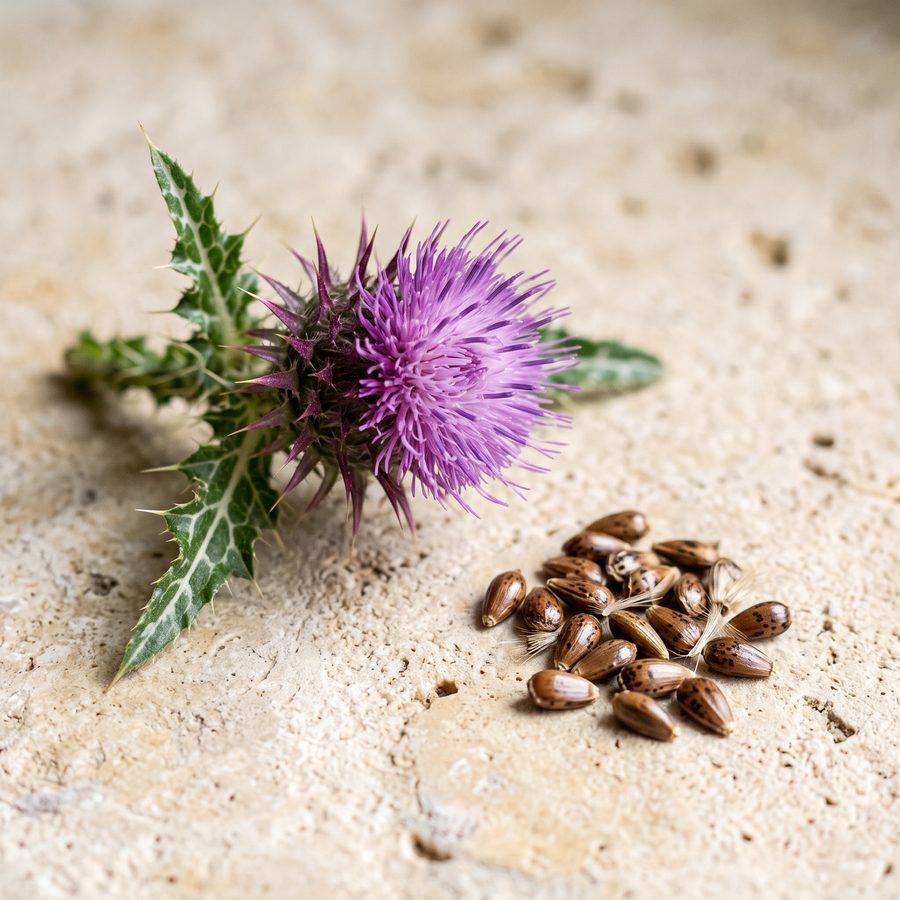

I didn't tell them what to buy. I'm careful about that with family. I said, "If you find one that covers all four circles, names every amount and isn't another pill, read it to me."
What my mother found
Four days later, my mother called. She'd gone looking on her own. I could hear paper rustling.
"Milk thistle and dandelion," she read. "NAC and glutathione. Artichoke. Choline."
Then: "That's all four of your circles, Elise. And every one has a number next to it."
She was right. It was a small amber bottle called ELORIA Liver Restore. Six ingredients, each printed with its own amount. No blend. One bottle for all four circles.
"And it's not a pill," she said. "It's drops."
It is. About forty, held under the tongue, nothing to swallow whole. I tried it later. It tastes like honey.
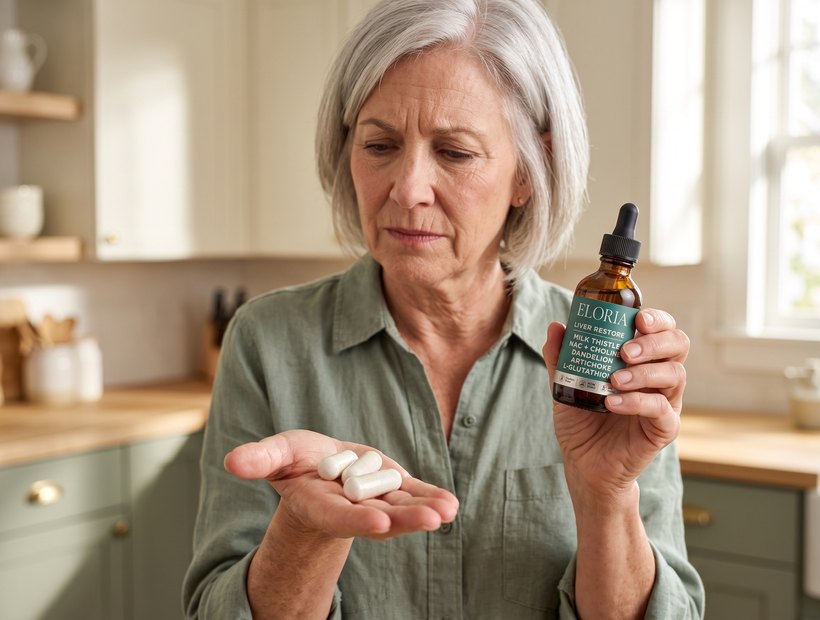
Then she asked the question he'd asked first. "And his metformin?"
Nothing in a bottle like this asks him to change a prescription. His pills stay exactly as his doctor wrote them. This goes on top, not instead.
She was quiet for a second. "So this is something I can do."
"Read the label to Dad," I said. "Slowly."
I can't tell you what his next printout will say. Nobody can, and I don't trust anyone who claims to.
But the next time he stands in that vitamin aisle, he'll know what each bottle is for, and what it isn't.
His first question, written down
So, Dad, here it is, written down this time.
Does NAC take care of the fat? No. NAC keeps the liver's glutathione shelf stocked. That's real, and it's why hospitals use it. In that trial, it didn't move the fat. Fat is crew four's work, and nothing in your cabinet covered crew four.
And for anyone else holding a liver bottle tonight: count the circles, read the back, and mind the morning box.